


Model NO.: T100050
Composition | Organic | Type | Solvents |
Flux Type | Solvents | Usage | Defoamer |
Grade | Industrial Grade | Purity | 98% |
MOQ | 1ton | Appearance | Colorless Transparent Liquid |
Trademark | TICHEM | Transport Package | Iron Drum/IBC/ISO Tank |
HS Code | 2909499090 | Origin | China |
Tripropylene Glycol n-Butyl Ether, commonly abbreviated as TPnB, is a slow-evaporating hydrophobic glycol ether with the chemical formula C₁₃H₂₈O₄ and CAS number 55934-93-5. It belongs to the propylene glycol ether family and is recognized as one of the slowest-evaporating glycol ethers available for commercial formulation.
TPnB appears as a colorless, low-viscosity liquid with minimal odor. Its molecular structure features a relatively long hydrophobic chain, which accounts for its high organic solubility, low water solubility, and high boiling point of 275°C. These properties make TPnB suitable for formulations that require extended residence time and strong polymer solvency. The product is classified under HS code 2909499090 and is registered under EINECS number 259-910-3.
Property | Value |
|---|---|
Molecular weight (g/mol) | 248.4 |
Flash point (Setaflash Closed Cup) | 126 °C (259 °F) |
Boiling point @760 mmHg, 1.01 bar | 275 °C (527 °F) |
Liquid Density @ 20° C | 0.930 g/cm³ |
Freezing Point | -75 °C (-103 °F) |
Viscosity (cP or mPa·s @ 25°C) | 7.0 |
Vapor Pressure @ 20° C | 0.01 mmHg |
Surface tension (aqueous @ 1000 mg/L) | 29.7 mN/m |
Relative Density (water = 1) | 0.930 at 25 °C |
pH value | Not applicable |
Autoignition temperature | 202 °C (estimated) |
Evaporation rate (n-butyl acetate = 1.0) | <0.01 |
TPnB serves primarily as a coalescent in water-borne architectural and industrial coatings. As a coalescing agent, it softens latex polymer particles during film formation, enabling them to fuse into a continuous, uniform film as water evaporates. Its slow evaporation rate allows the film-forming process to proceed over an extended period, which can support film integrity and appearance in formulations where longer open time is desired. The hydrophobic nature of TPnB also contributes to its distribution within the polymer phase of latex systems.
In heavy-duty cleaning formulations, TPnB functions as a solvent with demonstrated grease-penetration capability. It is used in oven cleaners as a coupling agent and grease penetrant, where its low water solubility and high organic solvency help dissolve and remove baked-on soils. The product is also used as a possible additive in floor wax strippers, supporting the breakdown and removal of polymer-based floor finishes.
TPnB finds use as a solvent in various ink formulations, including ball point and felt tip pen inks, stamp pad inks, and textile printing pastes. Its high boiling point and slow evaporation rate help control drying speed in these applications, allowing adequate time for ink transfer and leveling before the solvent evaporates. Additionally, TPnB can act as a plasticizer in selected resin systems, contributing to flexibility in certain polymer formulations.
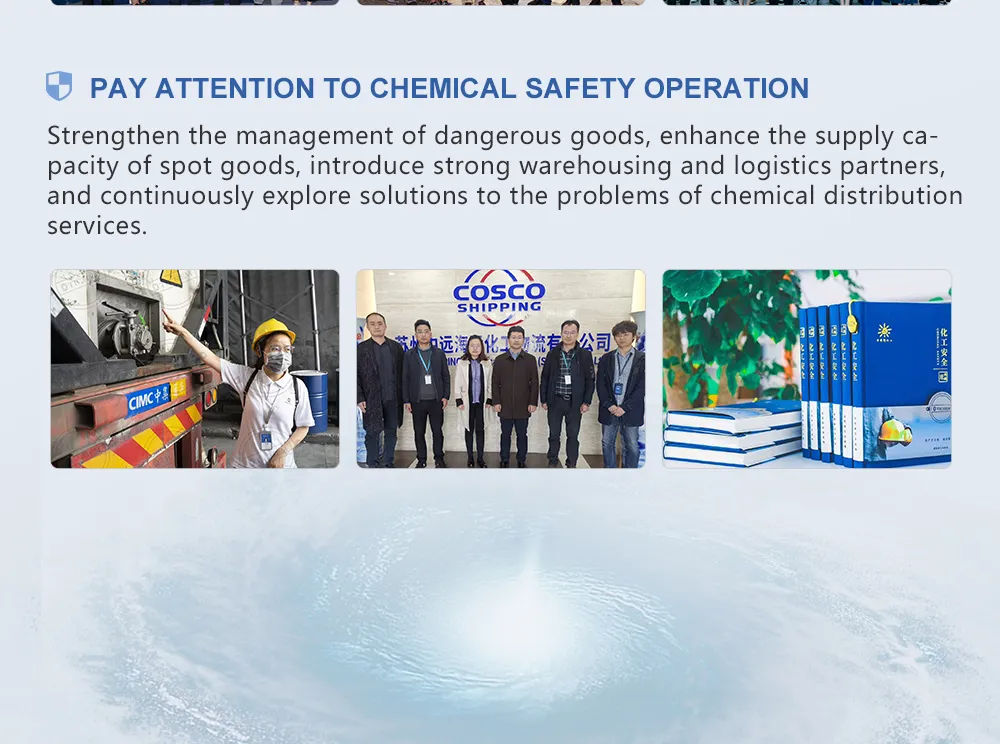
TPnB is available in several packaging options to accommodate different commercial procurement scales. Standard packaging includes iron drums, intermediate bulk containers (IBC), and ISO tank containers for bulk shipments. The minimum order quantity is typically one metric ton.
For storage, TPnB should be kept in a cool, well-ventilated area away from sources of ignition, given its flash point of 126°C. Containers should be tightly sealed to prevent moisture absorption and contamination. As with all glycol ethers, personnel handling TPnB should follow standard industrial hygiene practices, including the use of appropriate personal protective equipment and ensuring adequate ventilation in work areas.


The CAS number of Tripropylene Glycol n-Butyl Ether (TPnB) is 55934-93-5. It is also registered under EINECS number 259-910-3.
TPnB is primarily used as a coalescent in water-borne architectural and industrial coatings. It also serves as a solvent in heavy-duty cleaners, ink formulations, and textile printing pastes, and can function as a plasticizer in selected resin systems.
TPnB has low water solubility due to its hydrophobic molecular structure. This characteristic differentiates it from more hydrophilic glycol ethers and contributes to its effectiveness in polymer-phase applications such as coalescence in latex coatings.
The boiling point of TPnB is 275°C (527°F) at 760 mmHg (1.01 bar). This high boiling point, combined with its evaporation rate of less than 0.01 (relative to n-butyl acetate = 1.0), makes it one of the slowest-evaporating glycol ethers available.
TPnB is available in iron drums, intermediate bulk containers (IBC), and ISO tank containers for bulk transport. The minimum order quantity for commercial orders is typically one metric ton.


