


Model NO.: T107819
Composition | Organic | Type | Additive |
Flux Type | Basic Flux | Usage | Dissolved, Medium |
Grade | Industrial Grade | Purity | 99.5% |
MOQ | 1ton | Appearance | Colorless Transparent Liquid |
Trademark | TICHEM | Transport Package | Iron Drum/IBC/ISO Tank |
HS Code | 2905199090 | Origin | China |
Solketal, also known as 2,2-dimethyl-1,3-dioxolane-4-methanol or isopropylidene glycerol, is a five-membered cyclic acetal derived from glycerol and acetone. It carries the CAS registry number 100-79-8 and the EINECS number 202-888-7. With a molecular formula of C₆H₁₂O₃ and a molecular weight of 132.16 g/mol, this compound features a protected diol structure and a free primary hydroxyl group, making it a useful building block in organic synthesis.
Property | Value |
|---|---|
Molecular Weight (g/mol) | 132.16 |
Density | 1.066 g/cm³ at 20°C |
Melting point | -27°C |
Boiling point | 189-191°C |
Flash Point | 80°C (176°F) |
Water-soluble | miscible |
Vapor pressure | 34 Pa at 20°C |
Refractive index | n20/D 1.434 |
Acidity coefficient (pKa) | 14.20 ± 0.10 (Predicted) |
pH | 4.0-7.5 (H₂O) |
Solketal is produced through the acid-catalyzed ketalization reaction between glycerol and acetone. In this reaction, two hydroxyl groups of glycerol form a cyclic acetal (1,3-dioxolane ring) with the carbonyl group of acetone, leaving one primary hydroxyl group available for further chemical reactions. Common catalysts include p-toluenesulfonic acid, Amberlyst-15 resin, and various Lewis acid systems. The reaction generates water as a by-product, which is typically removed to drive the equilibrium toward product formation.
The isopropylidene protecting group shields two adjacent hydroxyl groups of the glycerol backbone while preserving the reactivity of the terminal hydroxyl group. This structural feature enables solketal to function as a selective building block in the synthesis of more complex molecules, where controlled introduction of glycerol-derived moieties is required.
Solketal serves as a reactive intermediate in the production of polyester resins, polyurethanes, and specialty polyols. Its primary hydroxyl group can participate in condensation and addition polymerization reactions, while the cyclic acetal structure introduces controlled branching and flexibility into polymer chains. Formulators use it to adjust crosslinking density and modify the mechanical and thermal properties of final polymer products. In coating formulations, it contributes to the resin backbone and can influence film hardness and adhesion characteristics.
Solketal exhibits solubility in both water and a range of organic solvents. This dual solubility profile makes it suitable as a co-solvent in formulations where compatibility across polar and non-polar components is needed. In industrial coatings, inks, and cleaning formulations, it can act as a coalescing aid and viscosity modifier. Its miscibility with water also supports its use in aqueous-based systems where partial organic co-solvency is required.
In the pharmaceutical industry, solketal functions as a chiral building block and protected glycerol intermediate for the synthesis of active pharmaceutical ingredients (APIs) and lipid-based drug delivery systems. Both enantiopure (R and S) and racemic forms are available, depending on the synthetic route. In cosmetic and personal care formulations, it may be used as a skin-conditioning agent, carrier solvent, or stabilizer in serums, creams, and emulsions, where its glycerol-derived structure supports formulation compatibility with skin-care actives.
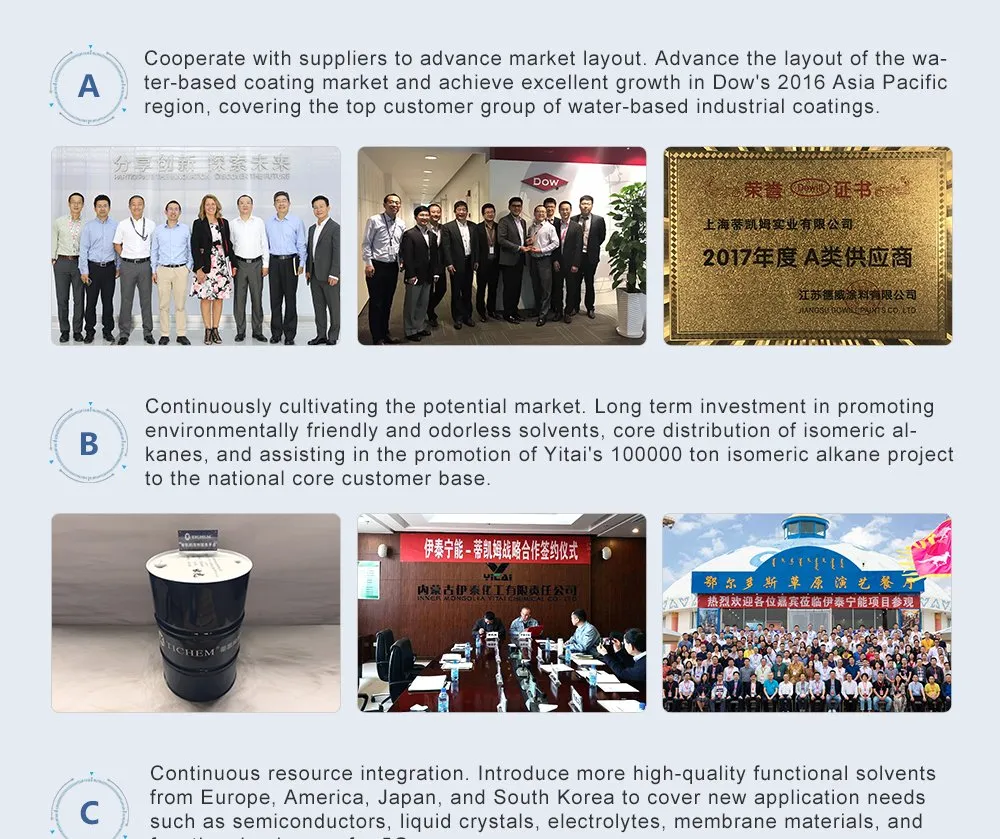
Solketal is supplied in industrial packaging options including 210KG iron drums, 1000KG IBC totes, and ISO tank containers for bulk shipments. The minimum order quantity is 1 metric ton. Storage in a cool, dry, well-ventilated area is recommended, with containers kept tightly sealed to prevent moisture absorption and contamination. As a flammable liquid with a flash point of approximately 80°C, it should be handled away from open flames and ignition sources. Material Safety Data Sheet (MSDS) and Certificate of Analysis (COA) are available upon request for each batch.
Solketal is a derivative of glycerol in which two hydroxyl groups are protected by an isopropylidene (acetonide) group, forming a 1,3-dioxolane ring. Glycerol has three free hydroxyl groups, while solketal has only one primary hydroxyl group available for reaction. This protected structure makes solketal useful as a selective building block in organic synthesis.
Solketal is a glycerol-derived cyclic acetal. Its acetal bond can undergo hydrolysis under acidic conditions, and the resulting glycerol is readily biodegradable. Specific biodegradation rates depend on environmental conditions and microbial populations present.
The standard industrial grade is offered at 99.5% minimum purity. Higher purity grades may be available upon request for applications with stricter requirements, such as pharmaceutical intermediate use. Each shipment is accompanied by a Certificate of Analysis detailing batch-specific test results.
Yes, solketal is miscible with water in all proportions. It can be incorporated into water-based coatings, adhesives, and cleaning formulations where it acts as a co-solvent, coalescing agent, or viscosity modifier. Its pH in aqueous solution typically ranges from 4.0 to 7.5.


