

Views: 0 Author: Site Editor Publish Time: 2025-12-31 Origin: Site


Adhesive bonding strength is the backbone of industries ranging from automotive assembly to construction. However, achieving a durable bond requires more than just a strong polymer; it requires the right solvent system to ensure the adhesive applies correctly and cures evenly.
In this article, we will explore how Methoxypropoxypropanol—widely recognized in the industry by its acronym DPM (Dipropylene Glycol Methyl Ether)—enhances adhesive performance. We will examine how its unique chemical structure allows it to function as a powerful coupling agent, contributing to stronger, more reliable bonds.
Methoxypropoxypropanol describes the specific molecular arrangement of a chemical commonly known as Dipropylene Glycol Methyl Ether (DPM). Its structure (C7H16O3) is characterized by the presence of both ether and alcohol functional groups.
This dual functionality is the key to its effectiveness. The "methoxy" and "propoxy" parts provide compatibility with organic materials (resins, oils), while the terminal hydroxyl (alcohol) group provides solubility in water. This makes Methoxypropoxypropanol a versatile coupling solvent—it bridges the gap between chemically different ingredients in an adhesive formulation.
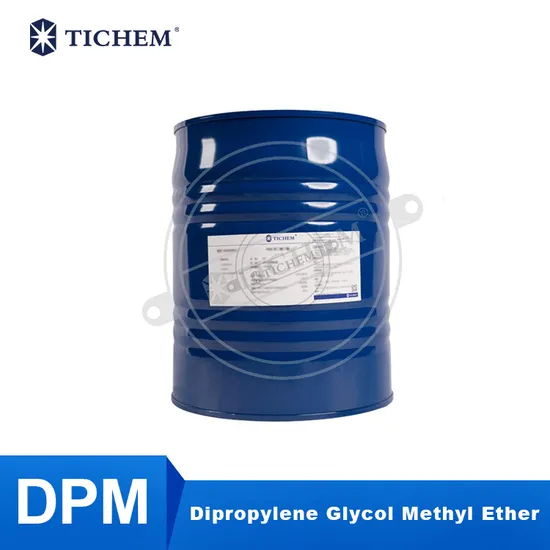
Unlike fast-evaporating solvents like acetone or ethanol, Methoxypropoxypropanol has a slow-to-moderate evaporation rate.
Controlled Drying: It keeps the adhesive "open" or wet for longer, allowing sufficient time for the adhesive to flow into the microscopic pores of the substrate before it dries.
Surface Tension Reduction: It significantly lowers the surface tension of water-based adhesives, allowing them to spread evenly without beading up.
The core question is: how does a solvent like Methoxypropoxypropanol actually make the final bond stronger? It works through three main mechanisms:
For an adhesive to bond effectively, it must "wet" the surface completely. If an adhesive stays on top of the surface like a droplet, the bond will be weak. Methoxypropoxypropanol acts as a surfactant. It reduces the surface tension of the liquid adhesive, forcing it to spread out and penetrate the microscopic roughness of the substrate (whether it's metal, plastic, or concrete). This increased physical contact area directly translates to higher bonding strength.
In water-based adhesives (like latex or acrylics), the polymer particles need to fuse together to form a continuous, strong film as the water evaporates. Methoxypropoxypropanol acts as a highly efficient coalescing agent.
It temporarily softens the polymer particles, allowing them to merge tightly together as the adhesive dries.
Instead of a brittle or patchy film, the result is a smooth, continuous, and mechanically strong adhesive layer.
Note: Unlike cross-linkers which chemically react, DPM ensures the physical matrix of the adhesive is perfect, preventing weak spots.
Many modern adhesives are hybrid formulations. Methoxypropoxypropanol is an excellent coupling agent that helps mix polar ingredients (like water) with non-polar ingredients (like resins). By ensuring the adhesive mixture is perfectly homogeneous, it prevents phase separation. A uniform adhesive ensures that the bonding strength is consistent across the entire application area.
In the automotive sector, adhesives are used to bond dissimilar materials, such as plastic to metal. Methoxypropoxypropanol is crucial here because it ensures the adhesive wets both the oily metal surface and the plastic effectively, creating a bond that withstands vibration and temperature changes.
For construction adhesives, such as those used in flooring or tiling, the "open time" (working time) is critical. The slow evaporation rate of Methoxypropoxypropanol gives workers enough time to position materials correctly. Once cured, the superior film formation ensures the tiles or chemical anchors remain fixed for years, even in humid environments.
High Solvency: Dissolves a wide range of resins including acrylics, epoxies, and polyurethanes.
Water Solubility: 100% water-soluble, making it ideal for eco-friendly water-borne adhesive systems.
Stability: Chemically stable and compatible with most adhesive formulations.
Drying Time: For applications requiring instant adhesion (like super glue), the slow evaporation of DPM might not be suitable.
Cost: It is generally a premium solvent compared to basic commodity solvents like toluene, but the performance benefits usually justify the cost.
As regulations on Volatile Organic Compounds (VOCs) become stricter, the industry is shifting away from harsh solvents. Methoxypropoxypropanol is considered a safer, more environmentally friendly option compared to traditional glycol ethers (like E-series). Its biodegradability and lower toxicity profile make it a key component in the next generation of "Green Adhesives."
Methoxypropoxypropanol is more than just a solvent; it is a performance enhancer for modern adhesives. By acting as a bridge between water and resins (coupling), lowering surface tension for better wetting, and ensuring distinct polymer particles fuse into a strong film (coalescence), it directly contributes to superior bonding strength.
For manufacturers looking to improve the durability and application quality of their adhesives, incorporating high-quality DPM—such as that supplied by Shanghai Tichem Industrial Co., Ltd.—is a scientifically proven strategy.
Q: Is Methoxypropoxypropanol the same as DPM?
A: Yes. Methoxypropoxypropanol is a descriptive chemical name for the substance industrially known as Dipropylene Glycol Methyl Ether (DPM). They refer to the same chemical compound.
Q: How does Methoxypropoxypropanol specifically increase bonding strength?
A: It does not chemically cross-link the adhesive but improves strength physically by ensuring better surface wetting (more contact area) and better film formation (coalescence), eliminating weak spots in the dried adhesive.
Q: Can this solvent be used in water-based adhesives?
A: Absolutely. Its unique structure makes it 100% water-soluble while still being able to dissolve oils and resins, making it perfect for water-based formulations.


