

Views: 0 Author: Site Editor Publish Time: 2026-04-01 Origin: Site


In printing ink formulations, solvent selection plays a critical role in determining overall performance, because solvents directly affect resin solubility, pigment dispersion, viscosity, flow, leveling, drying behavior, and final print appearance. When the solvent system is not properly matched to the formulation, manufacturers may encounter common problems such as poor flow, unstable viscosity during production or storage, excessively slow or uneven drying, weak substrate wetting, and inconsistent print quality across runs. These issues can reduce production efficiency and make it more difficult to achieve sharp images, uniform color, and reliable adhesion. Against this background, Propylene Glycol Monomethyl Ether (PM) has become a practical choice for optimizing ink systems, thanks to its balanced solvency, controlled evaporation rate, and ability to support smoother application and more stable printing performance.
Propylene Glycol Monomethyl Ether (PM) is a glycol ether solvent widely used in industrial formulations that require reliable solvency, controlled evaporation, and stable processing performance. It is commonly applied in coatings, cleaners, and printing inks because it can help dissolve key formulation components while supporting efficient production.
One of the main advantages of PM in printing ink formulations is its balanced evaporation rate. It does not evaporate too quickly, which helps prevent defects caused by premature drying, and it does not remain too long in the system, which helps maintain production efficiency.
PM also offers good solvency for a range of resin systems used in printing inks. This allows formulators to build more stable and uniform ink systems while giving them greater flexibility to adjust viscosity, flow, and drying behavior according to specific printing requirements.
By contributing to workable viscosity, smoother flow and leveling, and more controlled drying, PM helps manufacturers improve process stability throughout printing operations. At the same time, it supports better film formation and more consistent print performance, making it a practical solvent choice for achieving both efficient production and high-quality printing results.
Solvents play a fundamental role in printing ink performance because they influence nearly every stage of formulation and application. First, they help dissolve resins, creating a stable base that allows the ink system to form a uniform film during printing. They also support pigment dispersion, which is essential for maintaining consistent color development and preventing agglomeration that can affect appearance and print clarity. In addition, solvents are used to adjust viscosity so that the ink can be processed, transferred, and applied under suitable printing conditions. Their effect on flow and leveling is equally important, as a well-chosen solvent helps the ink spread evenly across the substrate and produce a smoother, more uniform printed surface.
Solvents strongly influence drying behavior by determining how quickly the ink film releases volatile components during and after application. A balanced drying profile is necessary to avoid issues such as overly rapid surface drying or slow solvent release that can disrupt production.
Solvents also affect substrate wetting, which determines how well the ink contacts and spreads across the printing surface. Good wetting improves coverage, supports adhesion, and helps achieve more even print results on different substrates.
When the solvent system is not properly matched to the ink formulation, a range of performance problems can occur. Poor resin dissolution or inadequate pigment dispersion may lead to streaking, unstable print appearance, and inconsistent color density. Improper viscosity control can make the ink difficult to handle during production and printing, while poor wetting may weaken adhesion to the substrate. At the same time, unsuitable drying behavior can reduce line efficiency and increase the risk of defects and rework. For this reason, solvent selection is not simply a formulation detail, but a key factor in achieving stable production and high-quality printing results.
One of the main advantages of Propylene Glycol Monomethyl Ether (PM) in printing inks is its excellent solvency for resin systems. In ink formulations, effective resin dissolution is essential for building a stable and homogeneous system, because undissolved or poorly compatible components can negatively affect performance during both production and printing. PM helps dissolve various resin components efficiently, which supports a more stable and uniform ink formulation and provides a reliable foundation for consistent application performance.
PM is also valued for its balanced evaporation rate. It does not evaporate too quickly, which helps prevent premature drying and surface-related defects during printing, and it does not evaporate too slowly, which could otherwise delay drying and reduce production efficiency. This balanced behavior gives formulators better control over drying performance and helps reduce common issues that may appear on the printed surface.
Another important benefit of PM is its contribution to improved flow and leveling. In printing operations, the way ink transfers and spreads across the substrate has a direct impact on appearance and consistency. PM helps promote smoother ink transfer and more even film formation, allowing the ink layer to distribute more uniformly. As a result, it supports better print appearance and greater consistency across the printed surface.
PM can also help formulators maintain workable ink viscosity during different stages of use, including mixing, storage, and application. Stable viscosity is essential for ensuring that the ink performs predictably throughout the printing process. When viscosity fluctuates too much, it can create processing difficulties and reduce print consistency. By helping maintain a more controlled viscosity profile, PM becomes especially valuable in continuous industrial printing operations where stable performance is critical.
By supporting better wetting and more uniform film formation, PM can contribute directly to higher print quality. A well-balanced ink system is more likely to produce cleaner images, sharper details, and more consistent color performance from one print run to another. For manufacturers seeking both process reliability and visual quality, PM offers practical advantages that help optimize overall ink performance.
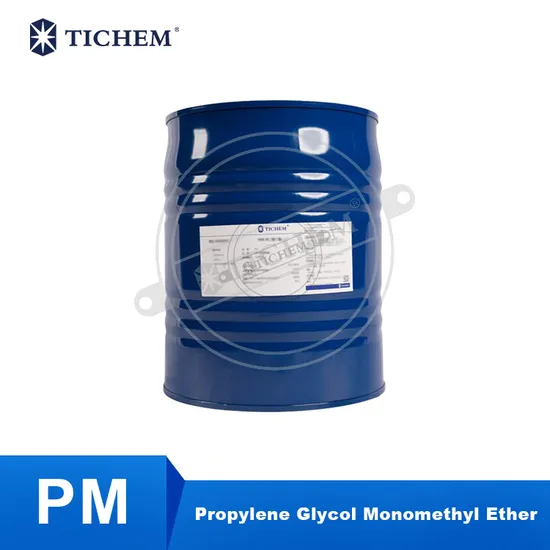
Propylene Glycol Monomethyl Ether (PM) can be used in a wide range of printing ink systems because it provides a practical balance of solvency, evaporation control, and formulation flexibility. In packaging inks, it can help support stable formulation performance, smoother ink laydown, and a more uniform printed appearance, which is important for both production efficiency and visual consistency. In gravure inks, PM can contribute to better flow, transfer, and film formation, helping maintain clean image reproduction and more even color density during high-speed printing. In flexographic inks, it may improve wetting and application behavior, making it easier to achieve smooth printing results on different flexible substrates. In screen printing inks, PM can help maintain workable viscosity and improve leveling, which supports more even ink deposition and cleaner final prints. It is also suitable for industrial and specialty printing formulations where formulators need a solvent that can help optimize handling, drying balance, and overall ink performance.
Although PM offers advantages in many printing applications, its actual performance always depends on the complete ink formulation. Factors such as resin type, substrate characteristics, additive selection, process conditions, and drying requirements all affect how well PM functions in a specific system. For this reason, PM should be evaluated as part of the full formulation strategy to ensure that it delivers the desired balance of process stability and print quality.
When using Propylene Glycol Monomethyl Ether (PM) in printing ink formulations, it is important to evaluate its performance within the full system. Formulators should consider compatibility with binders and additives, target drying speed, substrate requirements, production conditions, and environmental and safety compliance. These factors all affect how PM performs in terms of stability, application behavior, drying control, and final print quality.
PM should be optimized through formulation testing rather than a fixed dosage rule. The right amount depends on the resin system, substrate, additive package, and processing needs. For this reason, laboratory evaluation and production trials are essential to achieve the best balance of performance and efficiency.
Propylene Glycol Monomethyl Ether (PM) can help improve printing efficiency by supporting more stable ink performance throughout production. With better solvency, controlled evaporation, and workable viscosity, PM helps reduce instability during printing, allowing ink to transfer and dry more consistently. This can lower the risk of common print defects that lead to rework, while also reducing downtime caused by uneven or unpredictable ink behavior on press.
The choice of solvent has a direct impact on overall production results. A well-balanced solvent such as PM can help improve process stability, support quality control, and reduce unnecessary material loss and operational interruptions. By contributing to smoother production and more consistent print quality, PM also helps manufacturers achieve better cost performance in printing ink applications.
PM is used as a solvent to help dissolve resins, adjust viscosity, improve flow, and support stable drying performance in ink formulations.
PM offers a useful balance of solvency and evaporation rate, which helps improve printability, film formation, and overall ink stability.
Yes. PM can help enhance leveling, substrate wetting, and formulation uniformity, which may contribute to cleaner images and more consistent printing results.
They should evaluate resin compatibility, drying requirements, substrate type, processing conditions, and the performance targets of the final ink system.
In conclusion, Propylene Glycol Monomethyl Ether (PM) is a valuable solvent for improving printing ink performance across a wide range of formulations. Its strong solvency, balanced drying behavior, ability to support smooth flow and leveling, and contribution to consistent print quality make it a practical choice for manufacturers seeking both stable processing and reliable results. By helping optimize viscosity control, film formation, and overall application performance, PM can play an important role in building more efficient and dependable ink systems. As a professional chemical supplier, Shanghai Tichem Industrial Co., Ltd. is committed to providing quality solvent solutions that support the evolving needs of the printing industry. Ultimately, choosing the right solvent system is essential for achieving reliable production, high-quality printing, and better overall formulation performance.


