

Views: 0 Author: Site Editor Publish Time: 2026-04-07 Origin: Site


In metal corrosion inhibitor formulations, the solvent does far more than simply dilute the system. It affects how well the formula wets the metal surface, how evenly it spreads, how effectively functional ingredients are delivered, and how long the system remains in contact with the substrate before evaporation. If the solvent is not well matched, problems such as uneven coverage, unstable blending, and poor film uniformity can occur, especially on oily or contaminated metal surfaces. In this context, Dipropylene Glycol Mono Butyl Ether (DPNB), also known as Butyl Dipropasol Solvent, is a practical choice because it combines slow evaporation, good wetting performance, surface-tension reduction, and cleaning support. These characteristics make DPNB particularly useful in metal-treatment formulations where both cleaning efficiency and reliable protective performance are important.
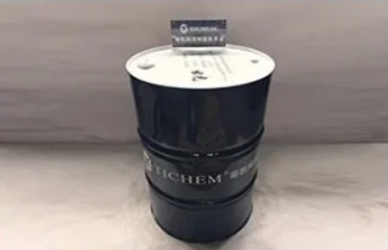
Dipropylene Glycol Mono Butyl Ether (DPNB) is a glycol ether solvent used in industrial formulations that require a balance of solvency, wetting, and slow evaporation. It has CAS number 29911-28-2, 99% purity, industrial grade, and is available in packaging such as iron drum, IBC, and ISO tank. It is a colourless transparent liquid suitable for coatings, cleaners, and other industrial formulations where stable handling and practical performance are important.
DPNB has a molecular weight of 190.3 g/mol, boiling point of 230°C, density of 0.913 g/cm³ at 20°C, viscosity of 4.9 mPa·s at 25°C, and vapor pressure of 0.04 mmHg at 20°C. It also shows surface-tension-lowering ability, which helps improve spreading on difficult surfaces. These properties make DPNB a slow and controlled-performance solvent. In metal corrosion inhibitor formulations, it is not the active inhibitor itself, but it can function as an effective carrier solvent that improves application behavior, surface coverage, and drying performance.
In metal corrosion inhibitor formulations, protection depends on how evenly the system reaches the metal surface. Because metal parts may have complex shapes or oily residues, poor wetting can cause uneven coverage. Dipropylene Glycol Mono Butyl Ether (DPNB) helps lower surface tension, allowing the formulation to spread more uniformly and improving delivery of protective ingredients.
DPNB is also useful because its slow evaporation gives the formulation more time to wet and cover the surface before drying. This helps reduce uneven deposition caused by fast solvent loss. In addition, DPNB can help remove oils and greases, making it suitable for metal-treatment formulations that need both cleaning support and corrosion protection.
Corrosion inhibitor formulations often contain multiple components, including actives, surfactants, wetting agents, and co-solvents. In these systems, Dipropylene Glycol Mono Butyl Ether (DPNB) helps improve compatibility and maintain a more stable liquid formulation. This makes it useful in products that require reliable blending, storage stability, and consistent performance.
Good surface coverage is essential in corrosion prevention. DPNB helps lower surface tension, allowing the formulation to spread more evenly across metal surfaces, including edges and contaminated areas. This can improve contact between the inhibitor system and the substrate, supporting more uniform protection.
Because DPNB evaporates relatively slowly, it can remain on the metal surface longer than fast-flashing solvents. This gives the formulation more time to level, spread, and interact with the substrate before drying. As a result, it can help reduce uneven deposition and improve application consistency.
DPNB is also suitable for multi-functional metal-treatment products that combine cleaning, wetting, and temporary protection. Its versatility makes it a practical choice for formulations that need to remove oily residues while also supporting more even delivery of protective ingredients.
The table below summarizes several DPNB properties and why they matter in metal corrosion inhibitor formulation design. Source data come from Tichem’s product page, with application context supported by Dow’s official DPnB overview.
Property | Value / Description | Why It Matters in Corrosion-Inhibitor Formulations |
Chemical name | Dipropylene Glycol Mono Butyl Ether / DPNB | Core solvent keyword used in industrial cleaning and coating-related systems |
CAS number | 29911-28-2 | Useful for procurement, compliance review, and technical documentation |
Purity | 99% | Supports industrial formulation consistency |
Appearance | Colourless transparent liquid | Suitable for clear or low-color formulated products |
Boiling point | 230°C | Indicates slow evaporation and longer on-surface working time |
Vapor pressure at 20°C | 0.04 mmHg | Helps explain reduced flash-off and better residence time |
Viscosity at 25°C | 4.9 mPa·s | Supports manageable handling and blending in liquid systems |
Surface tension | 28.8 @ 1000 mg/L | Relevant to wetting and spreading on metal surfaces |
Functional description | Slow-evaporating, hydrophobic glycol ether with coalescing properties | Useful where wetting, coupling, and controlled drying are needed together |
Listed application relevance | Metal cleaners, hard surface cleaners, water-reducible coatings, solvent-based coatings | Shows cross-functional value in cleaning-plus-protection product design |
One practical application of Dipropylene Glycol Mono Butyl Ether (DPNB) is in rust-preventive cleaners and maintenance fluids for industrial metal parts, tools, and fabricated components. In these products, formulators often need a solvent that can remove oily residues while also helping corrosion-protection ingredients spread more evenly after cleaning. Because DPNB combines grease-removal ability with surface-tension reduction, it is well suited for integrated formulations that support both cleaning and temporary anti-corrosion performance in one process.
DPNB is also relevant in water-reducible and mixed-system protective formulations. It is an effective solvent for water-reducible coatings and an active solvent for solvent-based coatings, showing its flexibility across different formulation types. For metal-treatment products that need to balance wetting, solvency, cleanup, and controlled drying, DPNB can help improve compatibility and overall formulation performance.
DPNB is especially useful in cleaner-plus-inhibitor systems designed for metal surfaces that are not perfectly clean. Residual machining oils, grease, and shop contamination can reduce the effectiveness of corrosion-control ingredients. Because DPNB is effective in metal cleaners and grease removal, it is a practical option for workshop maintenance, equipment servicing, and pre-storage protection products that must perform under real operating conditions.
Although Dipropylene Glycol Mono Butyl Ether (DPNB) offers useful performance benefits, it should be assessed within the full corrosion inhibitor formulation. Formulators should consider compatibility with inhibitor actives, surfactants, co-solvents, emulsification needs, residue level, and the balance between cleaning and protection. The intended end use also matters, since temporary protection, maintenance treatment, and longer-lasting protection may require different evaporation and deposition behavior.
DPNB performance also depends on actual application conditions. Factors such as oil contamination, metal type, part geometry, application method, line speed, and drying environment can all affect results. A formulation that performs well in the lab may behave differently in spray, dip, or wipe-on systems, so practical testing is essential before commercial use.
DPNB can help improve process consistency by supporting better wetting, longer working time, and more uniform surface coverage. This may reduce patchy deposition, poor spread, and other issues that lead to rework. In this way, DPNB helps create better conditions for the inhibitor package to perform reliably.
Solvent choice also affects quality control and cost performance. A formulation that spreads evenly, remains stable, and works well on contaminated metal surfaces is less likely to cause waste, defects, or repeat treatment. Because DPNB combines slow evaporation, wetting support, and cleaning utility, it can help improve efficiency, consistency, and overall formulation value.
No. DPNB is primarily a solvent, coupling aid, and performance-support ingredient rather than the active corrosion inhibitor. Its value lies in helping the formulation wet the metal surface, remove oily residues, spread more evenly, and maintain enough contact time for the inhibitor package to work more effectively.
A slow-evaporating solvent gives the formulation more time to wet, level, and interact with the metal surface before drying. This can help reduce uneven coverage and improve the distribution of protective ingredients across the substrate.
Yes. DPNB is suitable for formulations that need both cleaning and protection because it can help remove oils and greases while also supporting more even delivery of corrosion-control ingredients, especially on contaminated metal surfaces.
Formulators should first check compatibility with the inhibitor package, wetting on the target metal, performance on clean and contaminated surfaces, and the evaporation profile under real use conditions. Storage stability, residue level, and process fit should also be evaluated.
Dipropylene Glycol Mono Butyl Ether (DPNB) is a strong candidate for metal corrosion inhibitor formulations that need more than simple dilution power. Its combination of strong solvency support, excellent surface-tension-lowering ability, slow evaporation, grease-removal utility, and broad industrial compatibility makes it especially useful in cleaner-plus-protection systems and other practical metal-treatment products. While it is not itself the corrosion inhibitor, it can improve how the inhibitor package is delivered, distributed, and maintained on the metal surface. As a professional chemical supplier, Shanghai Tichem Industrial Co., Ltd. offers Dipropylene Glycol Mono Butyl Ether / DPNB as part of its broader portfolio for coatings, cleaners, and related formulation needs. In corrosion-control product development, choosing the right solvent can be just as important as choosing the right active package, because reliable protection begins with reliable formulation behavior.


