

Views: 0 Author: Site Editor Publish Time: 2026-04-14 Origin: Site


In the rubber industry, solvent choice affects more than simple cleanup, because it influences how effectively oily residues are removed from equipment, how evenly surfaces are prepared before downstream processing, how stable mixed formulations remain, and how quickly process areas can return to service. Glycol ethers are also used more broadly in rubber production, which makes them relevant not only to maintenance tasks but also to various process-support formulations used in rubber manufacturing environments. In this context, Propylene Glycol Monopropyl Ether (PNP) is particularly important because it combines fast evaporation, strong solvency, excellent coupling ability, and effective soil-removal performance. These characteristics make PNP especially useful in cleaning products and related industrial formulations, positioning it as a practical process-support solvent for cleaning, wetting, and ancillary applications in the rubber industry rather than as a direct rubber-compounding ingredient.
Propylene Glycol Monopropyl Ether / PNP is a glycol ether solvent used in industrial formulations that require a combination of fast evaporation, useful solvency, and good formulation flexibility. It has a CAS number of 1569-01-3, is supplied at 99% purity as an industrial-grade product, and is available in packaging options including iron drum, IBC, and ISO tank. The material is a colourless transparent liquid, as noted in its MSDS. These details show that PNP is positioned as a practical production-scale material rather than a narrow specialty solvent, making it suitable for industrial cleaning and process-support applications around rubber manufacturing.
Supplier descriptions of PNP consistently focus on four functional strengths: fast evaporation, high solvency, coupling ability, and soil removal. Tichem says PNP offers an excellent balance of hydrophilic and hydrophobic character and highlights its ability to solubilize organic soils, while Dow describes it as hydrophobic, highly solvent, and miscible with most organic solvents. Together, those characteristics suggest that PNP is especially useful where a formulation must remove greasy contamination, connect different formulation components, and dry quickly enough to keep operations moving.
Rubber-processing environments often involve oily residues, release agents, shop dirt, and other contaminants that interfere with inspection, maintenance, marking, coating, or routine housekeeping. In these settings, a solvent that dries quickly after cleaning can help reduce delays between process steps. Tichem explicitly says PNP’s primary use is in cleaning products and links that to its fast evaporation and ability to dissolve organic soils, while Dow lists degreasing and primary cleaning among its application benefits. That combination makes PNP relevant to rubber-industry operations where equipment cleanliness and quick turnaround both matter.
A second reason PNP is relevant is its coupling behavior. Rubber plants often rely on auxiliary formulations that are neither purely aqueous nor purely organic, such as maintenance cleaners, water-reducible support products, or blended process aids used around production lines. PNP functions as a coupling cosolvent, and solubilization or coupling agent is recognized as a key application benefit for this type of glycol ether.That means PNP can help improve compatibility when different ingredients need to remain in one workable liquid system, which is especially useful in ancillary formulations designed for real factory conditions rather than ideal laboratory blends.
One of the most practical benefits of Propylene Glycol Monopropyl Ether / PNP is its fast evaporation rate. Product information consistently identifies PNP as a fast-evaporating solvent, with an evaporation rate of approximately 0.21 relative to n-butyl acetate.In a rubber-manufacturing setting, faster dry-down can help reduce waiting time after cleaning or surface preparation, especially when tools, rollers, molds, or surrounding equipment must return to service quickly. This does not mean fast evaporation is always best for every job, but it is clearly useful where turnaround speed is an operational priority.
PNP is also valuable because it is designed to handle organic soils effectively. PNP has excellent ability to solubilize organic soils, and degreasing, primary cleaning, and spot/stain removal are recognized as key application benefits for this type of solvent. In rubber plants, where grease, oil, and residue buildup can interfere with maintenance and line cleanliness, that kind of performance can help improve surface preparation before the next process step. It also supports the use of PNP in cleaning products intended for industrial settings rather than only for light-duty applications.
Another important strength of PNP is its balance between water-side compatibility and organic solvency.Product information indicates that PNP is among the most hydrophobic P-series glycol ethers that still maintains complete water solubility, and it is also recognized as partly water soluble and miscible with most organic solvents. Even though supplier wording differs slightly, both sources point in the same practical direction: PNP is well suited to mixed-system formulations that need to bridge water-compatible handling with strong organic-soil solvency. For rubber-industry support applications, that makes it more versatile than a solvent designed only for one side of that balance.
The technical profile below shows why PNP is often chosen for fast-turnaround industrial cleaning and support formulations. The property values are based on MSDS data, and the interpretation focuses on how those values matter in rubber-industry operations.
Property | Typical value / description | Practical relevance in rubber-industry use |
Chemical name | Propylene Glycol Monopropyl Ether / PNP | Core keyword for sourcing and formulation work |
CAS number | 1569-01-3 | Useful for procurement and technical documentation |
Purity | 99% | Supports consistency in industrial formulations |
Appearance | Colourless transparent liquid | Suitable for clear cleaning or process-support blends |
Molecular weight | 118.2 g/mol | Standard reference for technical evaluation |
Boiling point | 149°C | Supports controlled but still relatively fast dry-down |
Flash point | 46–48°C | Important for handling and storage planning |
Density | about 0.88–0.885 g/cm³ | Useful in formulation and dosing calculations |
Viscosity at 25°C | about 2.4 cP | Helps maintain easy pumping, blending, and application |
Surface tension | 25.4 dynes/cm | Supports wetting and even spread on contaminated surfaces |
Key functional profile | Fast-evaporating, high solvency, coupling, soil removal | Matches cleaning and mixed-formulation support needs |
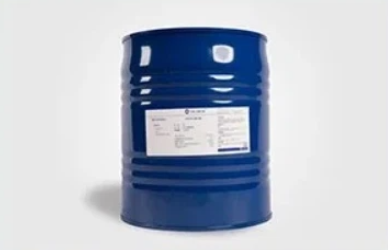
A practical use for Propylene Glycol Monopropyl Ether / PNP in the rubber industry is in formulations used to clean processing equipment, tools, and work areas. Because rubber operations frequently involve residues from oils, greases, and process soils, a solvent with strong degreasing performance and quick evaporation can help keep maintenance cycles efficient.
PNP can also be relevant in surface-preparation steps before marking, maintenance coating, inspection, or other downstream operations around rubber-production assets. Dow highlights low filming/low streaking as an appearance benefit, which suggests PNP can help leave a cleaner-looking surface after use. In practical terms, that matters when visible residue could interfere with later processing, visual checks, or finish quality on adjacent industrial components. This is especially useful in plant environments where fast cleanup and low residual appearance are both important.
A third application area is in ancillary formulations that need coupling support, such as water-reducible cleaners or mixed aqueous-organic process liquids used around production. Product information indicates that PNP functions as a coupling cosolvent, and it is also recognized as a coupling agent, coalescing agent, and solvent used in coatings and resin formulations. For rubber-industry users, that makes PNP a practical choice when the goal is not only cleaning strength but also formulation stability and ease of handling in a mixed-system product.
Even with its strong profile, PNP should be chosen based on the full application rather than on one attractive property alone. Formulators should consider how much cleaning strength is needed, how quickly the system should dry, whether visible residue matters, and how well the solvent must work with water or with other organic ingredients. Because PNP is positioned by suppliers as both a cleaning solvent and a coupling solvent, its value is often highest in applications where those two roles matter together rather than separately.
Lab screening and plant-level testing are important before finalizing PNP in a rubber-industry product. A blend that performs well on one type of residue or one type of equipment may behave differently on another line, another material, or under different ventilation and drying conditions. Since the available sources support PNP most clearly as a process-support solvent, formulators should verify compatibility, drying profile, residue behavior, and cleaning performance under actual use conditions before commercial adoption. This recommendation is an application-focused inference based on the supplier property profile.
No. PNP is a solvent for cleaning, coupling, coatings, resins, and related industrial applications. Broader industry guidance notes that glycol ethers are used in rubber production, which supports positioning PNP as a support solvent rather than a direct performance additive for the rubber compound itself.
It can, especially where quick dry-down is valuable. Because PNP is described as fast-evaporating and strong at soil removal, it can help shorten the time between cleaning and the next process step in operations where tools or surfaces need to return to service quickly. The exact productivity gain will still depend on the whole cleaning formulation and the real shop conditions.
PNP is useful in mixed systems because suppliers describe it as a strong coupling solvent with both water-side compatibility and organic solvency. That combination can help keep unlike ingredients in a more workable liquid system, which is important in ancillary industrial formulations where cleaning performance and formulation stability must be balanced.
The first checks should usually include residue-removal performance, drying speed, material compatibility, visible residue after cleaning, and behavior in the full formulation. Those factors matter because PNP’s strongest documented value is in cleaning and coupling performance, so the practical question is not whether the solvent is generally effective, but whether it fits the actual equipment, soils, and workflow of the target rubber-production environment.
Propylene Glycol Monopropyl Ether / PNP is a useful solvent for rubber-industry support applications because it combines fast evaporation, strong soil removal, high solvency, and reliable coupling behavior in one material. These strengths make it particularly relevant for cleaning, surface preparation, and ancillary mixed-system formulations used around rubber-processing operations. As a professional chemical supplier, Shanghai Tichem Industrial Co., Ltd. provides Propylene Glycol Monopropyl Ether / PNP as part of its broader solvent portfolio for industrial cleaning and formulation support. With the support of Shanghai Tichem Industrial Co., Ltd., manufacturers can access solvent solutions designed to improve not only cleaning performance, but also process efficiency, formulation stability, and smoother day-to-day rubber-industry operations.


